
Grow your audience, build trust and scale your business by defining your brand story and boosting it online

Businesses know they need to seek new customers online. But in a digital realm where attention spans are short and competition is global, simply having a website and running ads isn’t enough.
Marketing strategies will only work if you find your sellable brand story and engage potential customers with authentic stories and value propositions that your business represents.
It’s not just about a catchy slogan. It’s about authentic storytelling that highlights the people, values, and ideas behind your business. Combined with effective framing and positioning and continuous testing and refining, you’ll have an impactful content strategy to drive business growth.
A compelling brand narrative is the only way to stand out, especially if you are building from a smaller market like Estonia, Finland, or Latvia and targeting a global stage.
Here is a practical framework to help you define your brand story and boost it online.
- Why You Need to Find Your Brand Story
- Step 1: Start with the Vision
- Step 2: Clarify Your Value Propositions
- Step 3: Define Your Unique Selling Points (USP)
- Putting It Together: The Narrative Framework
- How to Boost Your Story Online
Why You Need to Find Your Brand Story
A strong brand story helps you attract attention, build trust, and differentiate yourself from competitors who sell similar products. It acts as a filter, ensuring your messaging is consistent, clear, and efficient across every channel, from your sales deck to your social media bio.
But how do you actually find it? It starts by looking inward.
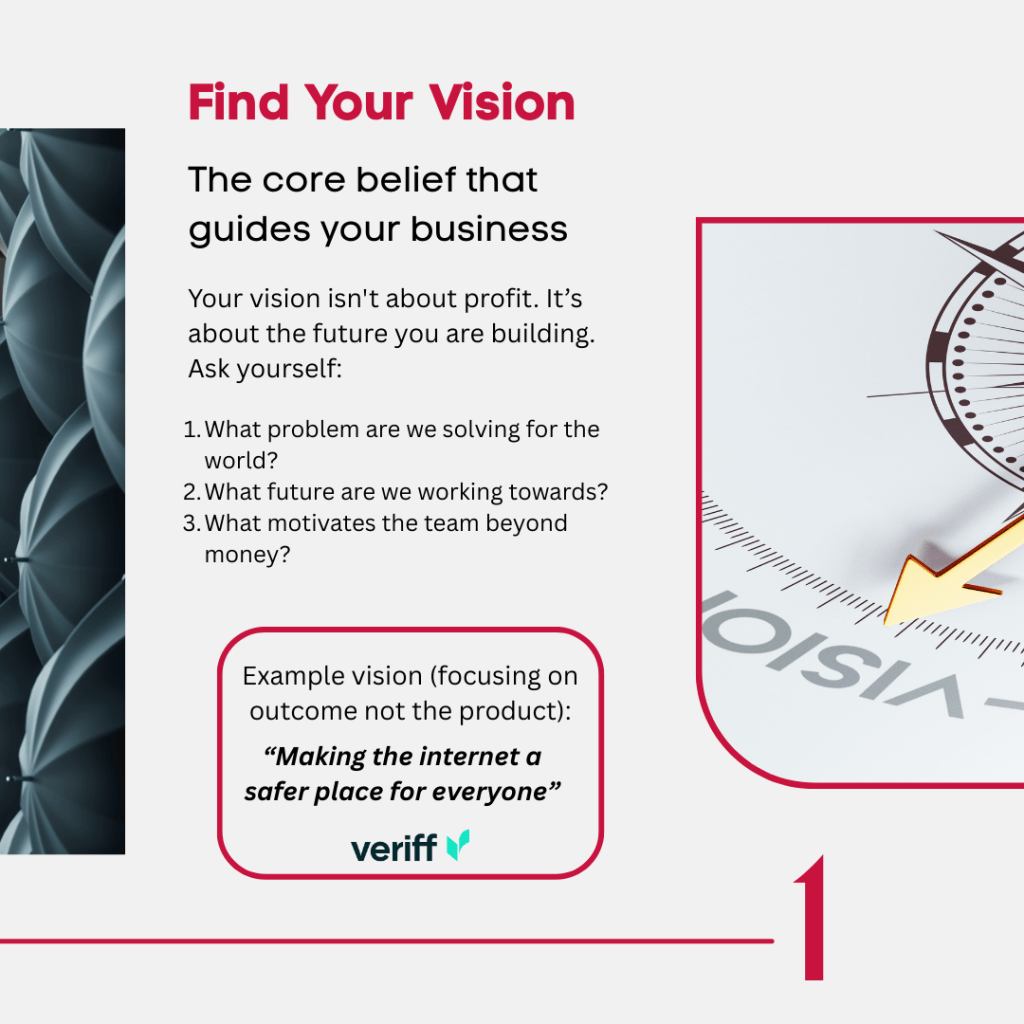
Step 1: Start with the Vision
Think big picture. Your company’s vision guides why you and your team strive every day to keep building.
To find this, ask yourself:
- Why does our business exist beyond making money?
- What future are we working towards?
- What problem are we solving for the world?
Use your answers and formulate them into a short future-facing statement essentially explaining what motivates you to run your business.
Examples:
- The vision of Veriff, a digital identity verification tech startup based in Estonia is “Making the internet a safer place for everyone.”
- Well-known Dutch beauty and wellness brand Rituals has a vision to “Transform everyday routines into meaningful moments.”
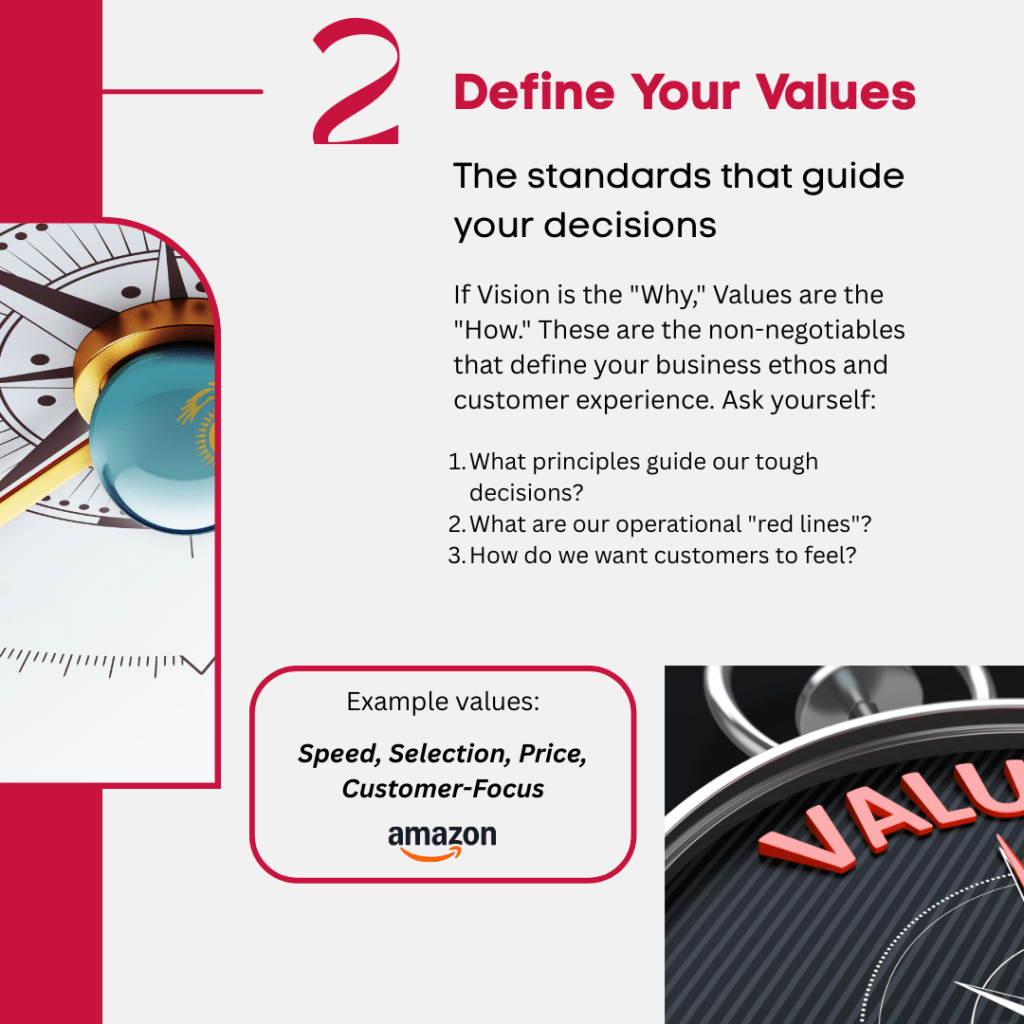
Step 2: Clarify Your Value Propositions
If the Vision is the “Why,” the Value Propositions are the “How.” These are the guiding principles that frame your strategy and your culture.
Choose 3-5 core values that reflect your business ethos. Ask yourself:
- When making a tough decision, what principles guide us?
- What are our non-negotiable red lines?
- What experience do we want customers to feel every time they interact with us?
Examples:
- The values of global e-commerce marketplace Amazon include: speed, selection, price, and customer-focus.
- Clothing manufacturer Patagonia prioritises environmental protection, quality, transparency, and responsible capitalism.
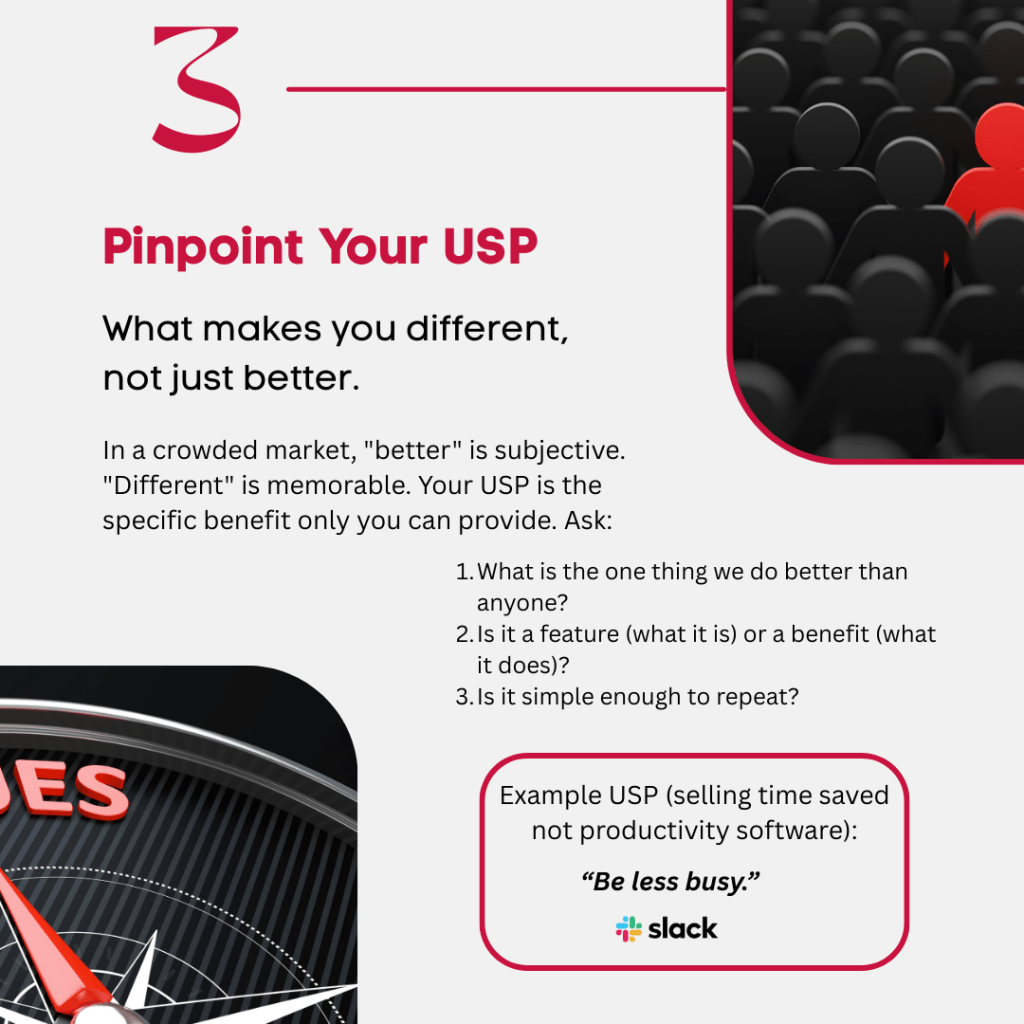
Step 3: Define Your Unique Selling Points (USP)
Your USP is what makes you different, not just better. In a crowded market, “better” is subjective; “different” is memorable.
Think about the specific benefits your product provides. Narrow it down to one core USP. It doesn’t have to be complex. It does need to be authentic, consistent, and easy to repeat.
Examples:
- The USP of Slack, a B2B productivity SaaS, is to “Be less busy.” (Focusing on the benefit of time, not just features).
- Swedish homeware and furniture brand Ikea’s USP is “Affordable, well-designed furniture you assemble yourself.”
Putting It Together: The Narrative Framework
By combining your Vision (the Future), Values (the Principles), and USP (the Differentiator), you can find your brand story. A strong story will be authentic to your business, grab attention, and support global growth.
It might look something like this:
“We exist to [Vision], guided by a commitment to [Values], delivering [USP] to help our customers succeed.”
Once you have this core narrative, you can build it out into a full messaging framework with case studies, data, and testimonials to support your broader content creation strategy.
How to Boost Your Story Online
Once you’ve defined your story, it’s time to bring it to life consistently across your digital channels.
1. Website
Turn your “About” page into a compelling narrative, not just a timeline of dates or a short bio. Highlight your USP and integrate your value propositions across your site’s copy, structure and navigation. This helps grow your organic audience by implementing SEO best practices tied to your unique vision, values, USP, and brand story.
2. PR and Media Mentions
Use PR and content marketing strategies to position your brand story in the press, preferably with backlinks to your site. Contribute thought leadership articles on topics related to your values and USP. For example, if your value is “Transparency,” write op-eds about transparency for industry-relevant publications. Update trusted information sources like Wikipedia and Google Maps with your brand story.
3. Social Media
- Be Regular: Share your origin story and vision frequently as new followers haven’t heard it yet.
- Be Consistent: Ensure every post reflects your USP or values implicitly.
- Be Clear: Pin your brand story to your profile or include it in your bio.
4. Email & Outreach
Don’t be afraid to introduce your story in welcome emails, cold outreach, and investor decks. Investors and clients buy into the brand story just as much as the product. Show how your values drive your work with real-world examples or testimonials.
5. Stay Consistent
A brand story doesn’t need to be a Hollywood blockbuster. It needs to be true to your business.
Revisit and repeat your story often. Most people won’t see it the first time. Ensure your team and collaborators use the same core message. A story grounded in purpose, shaped by values, and sharpened by differentiation is your most powerful asset for global growth.
Need help defining your narrative? Sounds & Stories helps Startups and SMEs find your brand story and translate it into a content strategy to drive growth.
 Sounds & Stories
One thought on “How to Find Your Brand Story and Support Business Growth”